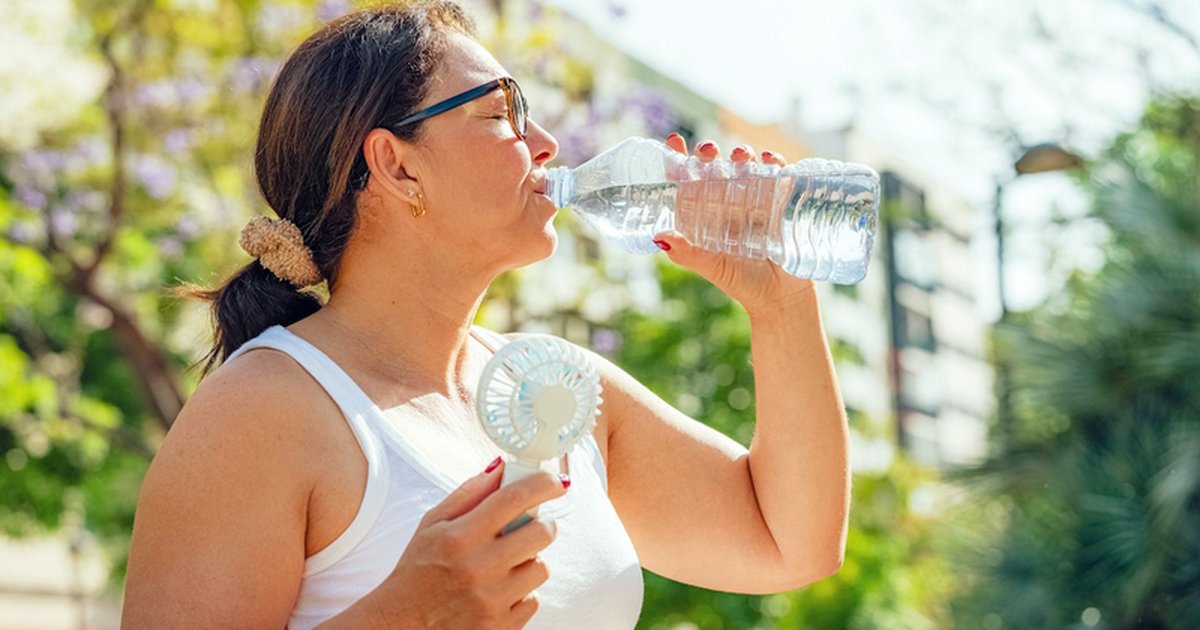
 I moved to Miami five years ago, and for the first three months I thought I was dying. Not really, but close. I would walk to my car, drive to work, walk into the building, and by the time I sat down I was already sweating through my shirt. I drank water like crazy. I still felt awful. My skin was sticky, my energy was low, and my urine was always dark yellow no matter how much I drank. I was doing everything right by sea‑level standards. But Miami isn’t sea‑level standards. It’s a tropical swamp.
Here’s the thing about tropical climates. It’s not just hot. It’s humid. Humid air holds more moisture than dry air, which sounds like it would help you sweat less. Actually, it does the opposite. When the air is already full of water, your sweat can’t evaporate. Evaporation is what cools you down. So you keep sweating. And sweating. And sweating. Your body never gets the cooling signal, so it just keeps pouring out fluid.
In a dry heat, you might sweat 0.8 liters per hour during moderate exercise. In Miami humidity, that same activity can push you to 1.5 liters per hour or more. That’s almost double. And because your sweat doesn’t evaporate, you don’t feel wet. You just feel hot and miserable. You don’t realize how much fluid you’re losing until you step on a scale.
I measured my own sweat rate on a 5‑mile paddleboard trip in July. Air temperature 90°F, humidity 85%. I weighed myself before and after. I lost 1.8 kilograms (4 pounds) in 90 minutes. That’s 1.8 liters of fluid. In 90 minutes. I was drinking constantly, and I still lost that much. That’s the reality of tropical hydration.
So if you live in or travel to a tropical place like Miami, Singapore, Bangkok, or Rio, you need to throw out the standard hydration rules. You need a whole new playbook.
First, multiply your baseline by 1.3. That’s the climate adjustment I use. A 70‑kilogram (154‑pound) person in a temperate climate needs about 2.5 liters (85 ounces) of total fluid per day. In the tropics, that same person needs 3.3 liters (112 ounces). That’s 7 cups instead of 10? Wait, 2.5 liters is 10.5 cups. 3.3 liters is 14 cups. So an extra 3‑4 cups per day just to exist.
Second, add electrolytes to everything. When you sweat that much, you lose sodium, potassium, and magnesium. Plain water will make you feel bloated and still thirsty because you’re diluting your blood without replacing the salt. I add a pinch of salt to my morning water and use electrolyte tablets in my workout bottles. Some people use coconut water, which has potassium but not much sodium. You need both.
Third, drink before you feel thirsty. Thirst is too slow in the tropics. By the time you’re thirsty, you’re already down 500‑800 mL (17‑27 ounces). Set a timer. Every 20 minutes, take a few swallows. I use a 20‑ounce bottle with a straw and sip constantly. If I wait until I’m thirsty, I’m playing catch‑up.
Fourth, check your urine color obsessively. In a temperate climate, you might check once a day. In the tropics, check every few hours. If it’s dark yellow, drink 500 mL immediately. If it’s amber, drink 1 liter. Don’t wait until the end of the day to realize you’re behind.
Fifth, eat hydrating foods. Cucumber, watermelon, oranges, celery, bell peppers. These aren’t just snacks. They’re fluid delivery systems with electrolytes. A bowl of watermelon after a run gives you water, sugar for quick energy, and potassium for muscle function. A cucumber salad with lunch adds 200‑300 mL of fluid without feeling like you’re drinking.
Sixth, avoid alcohol during the day. A beer at lunch in a temperate climate might be fine. In the tropics, alcohol acts as a diuretic and worsens dehydration. If you drink, have a glass of water for every alcoholic drink, and don’t count the beer toward your fluid goal. Beer has a BHI of 0.79, so it’s not doing you any favors.
Seventh, wear breathable clothing. This isn’t directly about hydration, but it affects sweat rate. Cotton holds moisture against your skin and keeps you hot. Synthetic fabrics wick sweat away, even if it doesn’t evaporate. You’ll feel cooler and potentially sweat a little less. Merino wool is also good for tropical climates because it resists odor and dries fast.
Eighth, acclimate slowly. If you’re visiting from a cold climate, your body will take 7‑14 days to adjust its sweat rate and sodium conservation. During that time, your fluid needs are even higher than a local’s. Drink extra. Don’t push yourself too hard. I’ve seen tourists collapse from heat exhaustion because they tried to do a long hike on day one.
Ninth, plan your outdoor activity for early morning or late evening. The sun is brutal from 11 AM to 3 PM. If you can run or paddle before 9 AM, your sweat rate will be 20‑30% lower. Same distance, much less fluid loss. I do all my long workouts before 8 AM. It’s still humid, but the sun isn’t directly cooking you.
Tenth, use a sweat rate test. Don’t guess. Weigh yourself before and after a typical workout. The difference is your sweat loss. Do this in different conditions. When I did mine, I learned that my 90‑minute paddle was costing me 1.8 liters. Now I know to bring 2 liters of fluid with electrolytes.
Eleventh, add a salty snack after exercise. Pretzels, pickles, salted nuts, or just a pinch of salt under your tongue. You need to replace not just the fluid but the sodium. Drinking water alone won’t fix the imbalance. A client of mine who moved from Chicago to Miami had constant muscle cramps until she started eating a pickle after every run. She thought it was a weird cure. It’s not weird. It’s sodium.
Twelfth, keep a bottle in your car. If you drive anywhere in the tropics, you’ll sweat just from walking to the car. Keep a 1‑liter bottle in the cup holder and sip at every red light. I have a metal insulated bottle that keeps water cold for hours. Cold water is more palatable, so you’ll drink more.
Thirteenth, be careful with air conditioning. Air conditioning is wonderful, but it also dries out your skin and respiratory tract. You can be sweating outside, then step into a freezing office, and stop feeling thirsty. But you’re still dehydrated. Continue drinking on schedule, not based on comfort.
Fourteenth, use a humidifier in your bedroom. This sounds counterintuitive in a humid climate. But if you sleep with AC, the air becomes dry. A humidifier adds moisture back, which reduces overnight fluid loss from breathing. I set mine to 50% humidity. I wake up with less dry mouth and a lighter urine color.
Fifteenth, don’t rely on sports drinks alone. Many sports drinks have too little sodium for tropical sweat rates. Check the label. You want at least 500 mg of sodium per liter. If your drink has only 200 mg, add a pinch of salt or use a tablet. I use a product that has 300 mg per 500 mL. Two bottles give me 600 mg per hour, which matches my loss.
Let me tell you about a client named Carlos. He moved from Seattle to Miami for a job. He was an avid runner. In Seattle, he ran 10 miles without water and felt fine. In Miami, he tried the same run and ended up vomiting on the side of the road. His urine was dark brown. He came to me scared.
We did a sweat test. He lost 2.2 liters (74 ounces) in one hour. That’s almost 3% of his body weight. His sweat sodium was 1,100 mg/L. He was a salty sweater in a tropical climate. The worst combination.
We built a plan. He runs before 7 AM now. He carries a hydration vest with 1.5 liters of electrolyte solution. He adds a salt tablet every 20 minutes. He drinks 500 mL of water with a pinch of salt before he leaves the house. He eats a banana and a pickle after every run. His runs are now safe, and he’s not vomiting anymore. He said it took him a month to adjust, but now he feels stronger than he ever did in Seattle. The heat, he says, made him tough.
The tropics are not impossible. They’re just different. You have to respect the humidity. You have to plan. You have to drink more than you think, with more salt than you think.
I have tools that help with tropical hydration.
I moved to Miami five years ago, and for the first three months I thought I was dying. Not really, but close. I would walk to my car, drive to work, walk into the building, and by the time I sat down I was already sweating through my shirt. I drank water like crazy. I still felt awful. My skin was sticky, my energy was low, and my urine was always dark yellow no matter how much I drank. I was doing everything right by sea‑level standards. But Miami isn’t sea‑level standards. It’s a tropical swamp.
Here’s the thing about tropical climates. It’s not just hot. It’s humid. Humid air holds more moisture than dry air, which sounds like it would help you sweat less. Actually, it does the opposite. When the air is already full of water, your sweat can’t evaporate. Evaporation is what cools you down. So you keep sweating. And sweating. And sweating. Your body never gets the cooling signal, so it just keeps pouring out fluid.
In a dry heat, you might sweat 0.8 liters per hour during moderate exercise. In Miami humidity, that same activity can push you to 1.5 liters per hour or more. That’s almost double. And because your sweat doesn’t evaporate, you don’t feel wet. You just feel hot and miserable. You don’t realize how much fluid you’re losing until you step on a scale.
I measured my own sweat rate on a 5‑mile paddleboard trip in July. Air temperature 90°F, humidity 85%. I weighed myself before and after. I lost 1.8 kilograms (4 pounds) in 90 minutes. That’s 1.8 liters of fluid. In 90 minutes. I was drinking constantly, and I still lost that much. That’s the reality of tropical hydration.
So if you live in or travel to a tropical place like Miami, Singapore, Bangkok, or Rio, you need to throw out the standard hydration rules. You need a whole new playbook.
First, multiply your baseline by 1.3. That’s the climate adjustment I use. A 70‑kilogram (154‑pound) person in a temperate climate needs about 2.5 liters (85 ounces) of total fluid per day. In the tropics, that same person needs 3.3 liters (112 ounces). That’s 7 cups instead of 10? Wait, 2.5 liters is 10.5 cups. 3.3 liters is 14 cups. So an extra 3‑4 cups per day just to exist.
Second, add electrolytes to everything. When you sweat that much, you lose sodium, potassium, and magnesium. Plain water will make you feel bloated and still thirsty because you’re diluting your blood without replacing the salt. I add a pinch of salt to my morning water and use electrolyte tablets in my workout bottles. Some people use coconut water, which has potassium but not much sodium. You need both.
Third, drink before you feel thirsty. Thirst is too slow in the tropics. By the time you’re thirsty, you’re already down 500‑800 mL (17‑27 ounces). Set a timer. Every 20 minutes, take a few swallows. I use a 20‑ounce bottle with a straw and sip constantly. If I wait until I’m thirsty, I’m playing catch‑up.
Fourth, check your urine color obsessively. In a temperate climate, you might check once a day. In the tropics, check every few hours. If it’s dark yellow, drink 500 mL immediately. If it’s amber, drink 1 liter. Don’t wait until the end of the day to realize you’re behind.
Fifth, eat hydrating foods. Cucumber, watermelon, oranges, celery, bell peppers. These aren’t just snacks. They’re fluid delivery systems with electrolytes. A bowl of watermelon after a run gives you water, sugar for quick energy, and potassium for muscle function. A cucumber salad with lunch adds 200‑300 mL of fluid without feeling like you’re drinking.
Sixth, avoid alcohol during the day. A beer at lunch in a temperate climate might be fine. In the tropics, alcohol acts as a diuretic and worsens dehydration. If you drink, have a glass of water for every alcoholic drink, and don’t count the beer toward your fluid goal. Beer has a BHI of 0.79, so it’s not doing you any favors.
Seventh, wear breathable clothing. This isn’t directly about hydration, but it affects sweat rate. Cotton holds moisture against your skin and keeps you hot. Synthetic fabrics wick sweat away, even if it doesn’t evaporate. You’ll feel cooler and potentially sweat a little less. Merino wool is also good for tropical climates because it resists odor and dries fast.
Eighth, acclimate slowly. If you’re visiting from a cold climate, your body will take 7‑14 days to adjust its sweat rate and sodium conservation. During that time, your fluid needs are even higher than a local’s. Drink extra. Don’t push yourself too hard. I’ve seen tourists collapse from heat exhaustion because they tried to do a long hike on day one.
Ninth, plan your outdoor activity for early morning or late evening. The sun is brutal from 11 AM to 3 PM. If you can run or paddle before 9 AM, your sweat rate will be 20‑30% lower. Same distance, much less fluid loss. I do all my long workouts before 8 AM. It’s still humid, but the sun isn’t directly cooking you.
Tenth, use a sweat rate test. Don’t guess. Weigh yourself before and after a typical workout. The difference is your sweat loss. Do this in different conditions. When I did mine, I learned that my 90‑minute paddle was costing me 1.8 liters. Now I know to bring 2 liters of fluid with electrolytes.
Eleventh, add a salty snack after exercise. Pretzels, pickles, salted nuts, or just a pinch of salt under your tongue. You need to replace not just the fluid but the sodium. Drinking water alone won’t fix the imbalance. A client of mine who moved from Chicago to Miami had constant muscle cramps until she started eating a pickle after every run. She thought it was a weird cure. It’s not weird. It’s sodium.
Twelfth, keep a bottle in your car. If you drive anywhere in the tropics, you’ll sweat just from walking to the car. Keep a 1‑liter bottle in the cup holder and sip at every red light. I have a metal insulated bottle that keeps water cold for hours. Cold water is more palatable, so you’ll drink more.
Thirteenth, be careful with air conditioning. Air conditioning is wonderful, but it also dries out your skin and respiratory tract. You can be sweating outside, then step into a freezing office, and stop feeling thirsty. But you’re still dehydrated. Continue drinking on schedule, not based on comfort.
Fourteenth, use a humidifier in your bedroom. This sounds counterintuitive in a humid climate. But if you sleep with AC, the air becomes dry. A humidifier adds moisture back, which reduces overnight fluid loss from breathing. I set mine to 50% humidity. I wake up with less dry mouth and a lighter urine color.
Fifteenth, don’t rely on sports drinks alone. Many sports drinks have too little sodium for tropical sweat rates. Check the label. You want at least 500 mg of sodium per liter. If your drink has only 200 mg, add a pinch of salt or use a tablet. I use a product that has 300 mg per 500 mL. Two bottles give me 600 mg per hour, which matches my loss.
Let me tell you about a client named Carlos. He moved from Seattle to Miami for a job. He was an avid runner. In Seattle, he ran 10 miles without water and felt fine. In Miami, he tried the same run and ended up vomiting on the side of the road. His urine was dark brown. He came to me scared.
We did a sweat test. He lost 2.2 liters (74 ounces) in one hour. That’s almost 3% of his body weight. His sweat sodium was 1,100 mg/L. He was a salty sweater in a tropical climate. The worst combination.
We built a plan. He runs before 7 AM now. He carries a hydration vest with 1.5 liters of electrolyte solution. He adds a salt tablet every 20 minutes. He drinks 500 mL of water with a pinch of salt before he leaves the house. He eats a banana and a pickle after every run. His runs are now safe, and he’s not vomiting anymore. He said it took him a month to adjust, but now he feels stronger than he ever did in Seattle. The heat, he says, made him tough.
The tropics are not impossible. They’re just different. You have to respect the humidity. You have to plan. You have to drink more than you think, with more salt than you think.
I have tools that help with tropical hydration.
Daily Water Intake Calculator
Select “tropical” as your climate. The tool applies the 1.3 multiplier automatically.
All data stays in your browser — we never see it.
Exercise Sweat Loss Estimator
Enter temperature and humidity. Get accurate sweat rate estimates for tropical workouts.
All data stays in your browser — we never see it.
Beverage Hydration Index Tool
Filter by sodium content. Find a drink that matches your tropical sweat loss.
All data stays in your browser — we never see it.